“The first condition of progress is the removal of censorship.”
—George Bernard Shaw
In the previous two parts of the series (Giants Rise and Tech Oligarchs), we examined the rise of technology giants and silicon sultans. The consolidation of power in the hands of technological mega-corporations and the tycoons that run them shattered the utopian dreams of the 1990s, which we explored earlier (in Great Expectations). The cornerstone of the cyber-utopian vision of a future information society—promoting expression, freedom, equality, democracy, peace, and prosperity—was the expectation that the Internet would decentralize social power.
The idea that the Information Revolution would shift power from social elites to individuals did not seem far-fetched. The 1990s Internet was designed to minimize bottlenecks and maximize access. Its open architecture promoted anonymity and resisted censorship. Anonymous, unmediated access to information and complete freedom of expression were supposed to eliminate knowledge gaps and empower citizens while weakening existing political, economic, and traditional media power structures.
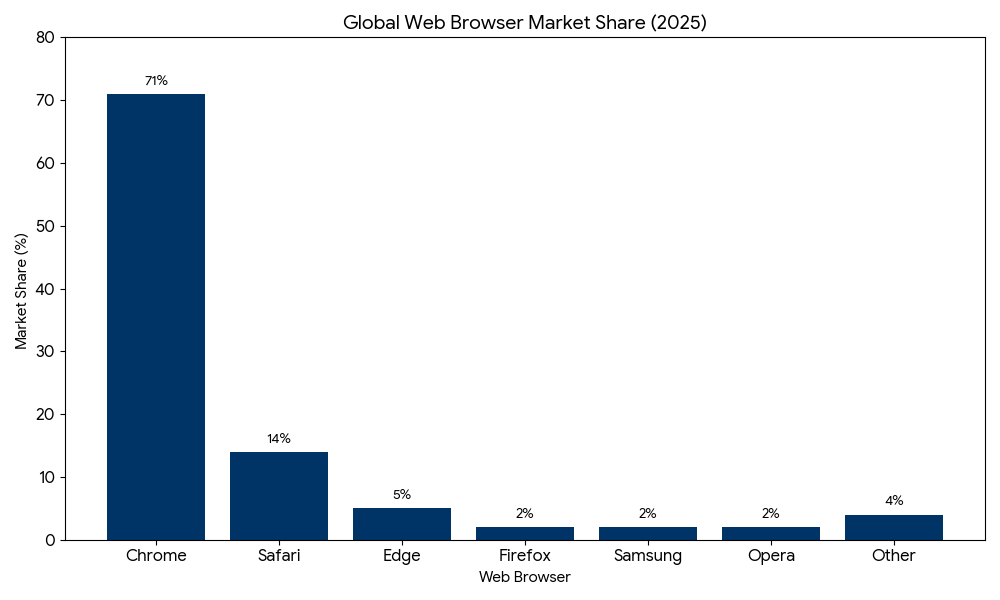
Over the past 30 years, access to information has expanded, but it remains far from unmediated, as much of the open architecture of the 1990s Internet has been appropriated by technology giants. Searching the web, for example, is almost exclusively done through Google, so much so that googling has become a commonly used verb, included in major dictionaries. The most searched word on Bing, Microsoft’s underdog search engine, is Google. Google, Apple, and Microsoft dominate the web browser market, a primary gateway to the web, with Chrome, Safari, and Edge. Microsoft also owns a large share of AI forerunner Open AI, which is also becoming a popular online gateway.
As for expression, the Internet, smartphones, and especially social networks seemingly enable people everywhere to express themselves freely, eliminating traditional barriers to free speech. However, user-generated content on social networks—the primary platform for expression—is subject to moderation. Social media algorithms prioritize content based on engagement, relevance, or monetization. Content perceived as legally infringing or harmful, like hate speech, misinformation, or violence, is limited or removed. Content is further subject to community guidelines and policies that vary by platform. Social networks cooperate with governments and legal systems and comply with legal orders and restrictions concerning content. Most social platforms’ business models are based on advertising, which motivates them to discourage or limit controversial content that is not brand-friendly. Most major social media platforms are owned by Meta (Facebook, Instagram, and WhatsApp), Google (YouTube), Microsoft (LinkedIn), and Tesla’s Elon Musk (X, formerly Twitter).
The rise of social media platforms has largely eliminated anonymous online access and expression. In the 1990s, Internet pseudonyms were the default. That is no longer the case. Platforms such as Facebook and LinkedIn enforce real-name policies; phone numbers, which are harder to change than email addresses, are now commonly used for identification; online tracking has become ubiquitous; governments, e.g. Australia, the UK, and many US states, have begun implementing mandatory online identification for age verification; and advances in AI have made facial recognition from online images routine. Most importantly, online culture itself has shifted, and anonymity is no longer widely accepted as the norm.
Individuals can forgo popular platforms and express themselves through other online channels that are not run or mediated by large technology corporations. In keeping with the utopian ideals of the early Information Revolution, anyone can purchase web hosting, create an independent website, and publish content freely. However, the reach of an independent website, one of around 1.5 billion, would be extremely limited. To increase its potential reach, it would have to be indexed by Google, which limits or downgrades indexed content that does not conform to its standards. Online content deemed less relevant, low-quality, misleading, infringing, harmful, explicit, or violent would be much more difficult to find. Furthermore, some web hosting providers and other online service providers may impose their own content limitations, and most would seek to comply with legal orders and government restrictions concerning content. If an independent online platform gains an audience and becomes popular, its exposure to legal liability would increase, and it would likely draw more attention from search engines, web hosting providers, online service providers, and legal authorities—each with its own rules and restrictions to be followed.
Many of the content restrictions imposed by online platforms are warranted and reasonable; most would agree that some limitations should apply to freedom of expression—for example, regarding hate speech, harassment, harmful misinformation, fraud, privacy infringement, and other illegal content. In fact, online platforms are rightfully criticized for not doing enough to restrict harmful content and combat misinformation. Actor Sasha Baron Cohen’s viral Anti-Defamation League speech on the matter comes to mind. However, mechanisms that place legitimate limits on content can easily become overreaching censorship. In January 2025, Meta’s Chief Global Affairs Officer, Joel Kaplan, said in a statement:
“…we have been over-enforcing our rules, limiting legitimate political debate and censoring too much trivial content and subjecting too many people to frustrating enforcement actions. For example, in December 2024, we removed millions of pieces of content every day. While these actions account for less than 1% of content produced every day, we think one to two out of every 10 of these actions may have been mistakes (i.e., the content may not have actually violated our policies).”
In his statement, Kaplan announced that Meta would shift from an algorithm-based fact-checking model to community notes, a model used by the social network X. However, community notes face criticism for being biased, inconsistent, and susceptible to group manipulation.
Content moderation is only the tip of the iceberg. Technology giants shape the architecture of online platforms and regulate user behavior on these platforms. Communication services and social media platforms have been intentionally designed to maximize user engagement. A good way to increase engagement is to use algorithms to personalize content based on user preferences and behavior. This can create “filter bubbles” in which users are repeatedly exposed to content that aligns with their existing beliefs, reinforcing those beliefs and potentially pushing them toward more extreme views. Furthermore, social media often connects like-minded individuals, creating “echo chambers” where dissenting opinions are rarely encountered; radical views are amplified and made to seem more mainstream than they actually are. Online platform algorithms prioritize content that generates high engagement, including sensational or controversial material that provokes strong emotional responses. Often, extreme content is promoted while moderate voices are suppressed, creating a fertile environment for conspiracy theories, anti-institutional sentiments, misinformation, and violent discourse. Technology companies are well aware that social media platforms polarize and radicalize users, but continue to prioritize revenues over the public good. Large online platforms are also designed to maximize advertising revenues by exploiting user data, engagement patterns, and psychological tendencies—often at the expense of user privacy and well-being. They are built to be addictive, encourage compulsive use, and prioritize superficial transactional interaction over meaningful connection, depth, or quality.
So, what happened to the 1990s utopian vision of power shifting from social elites to individuals through unmediated access to information and complete freedom of expression? The technology giants have become information gatekeepers, amassing incredible power which, as we have seen in the previous essay (Tech Oligarchs), is concentrated in the hands of just a few ultra-wealthy men. These silicon sultans form a new technology elite whose power extends into the old power structures—business, politics, government, and traditional media. They control the flow of information and govern the online communities of the Information Revolution, shaping them according to their business interests. Both access and expression—the use of information and its creation—are mediated and filtered. Individuals today do have greater access to information and more avenues for self-expression, yet the vision of decentralized social power leading to complete freedom and equality remains unrealized. Furthermore, public discourse has become radicalized, affecting global politics, democracy, and world order as dreams of world peace fade away.
47 · 1 · Dec. 20, 2025 · Markets · Index
Continue to the next part of this series:
-

Broken Dreams
Part 6/7: How the hopes for world peace were lost.